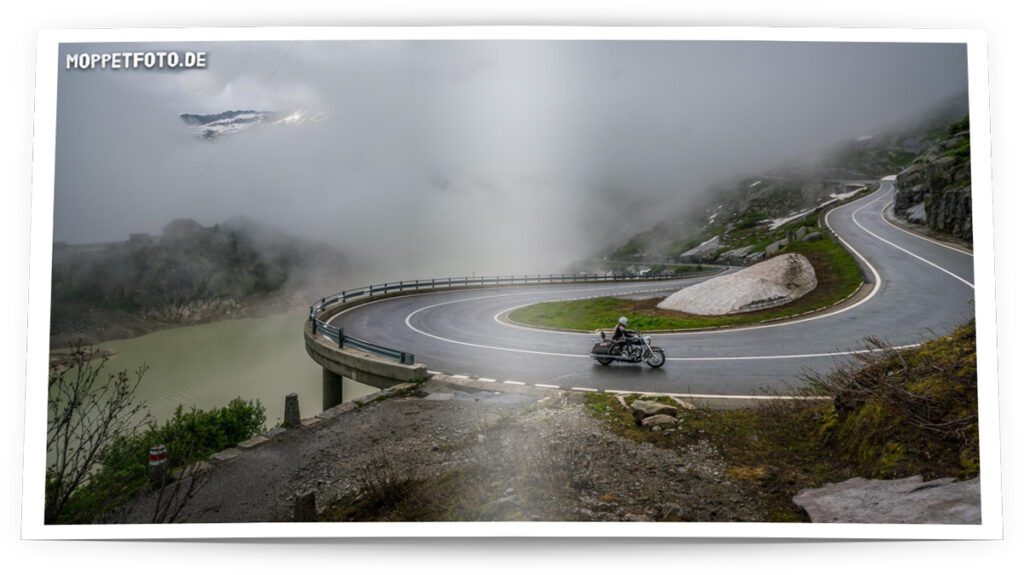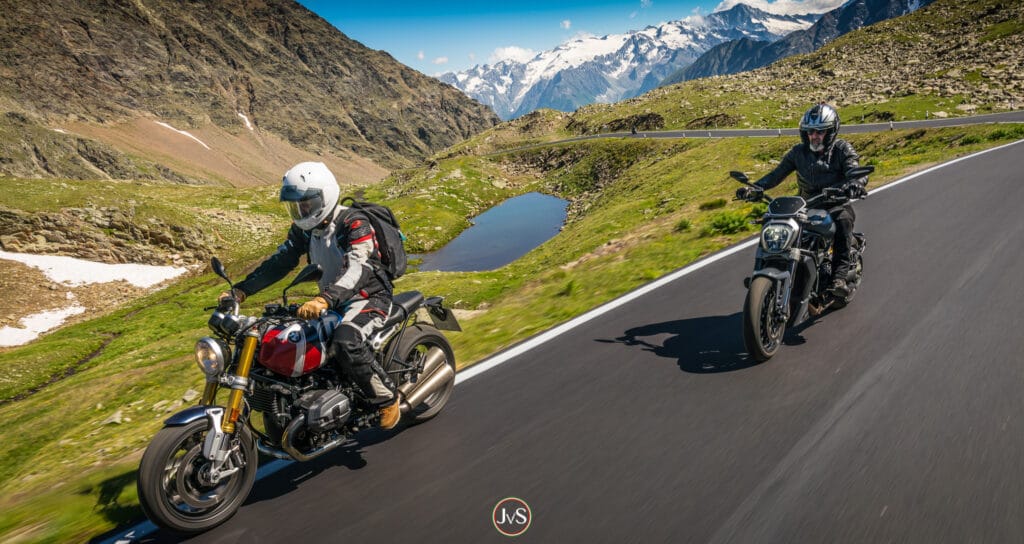
Not the number 1 in terms of altitude – but definitely right up there in terms of experience: the Gavia. In the shadow of the famous Stelvio, it’s a very special alpine pass. A first class Moppetprosa story – all photos by www.moppetfoto.de, text by me.

This text appeared – slightly revised – in MOTORRAD, Europe’s biggest motorcycle magazine, issue 6.2021 (March).
Before you read, please note: this post was translated with the help of Deepl.
If you find any errors – please have fun first and then give me a hint.
Uzza, a small village just a stone’s throw behind Bormio, subtly gives a first impression of the unique character of the Gavia pass. If you turn into the unadorned cluster of houses with raw and old façades with too much speed, you will be caught cold by narrow passages. And even before the desolate, crumbling buildings suggest little good, a splendid sgraffitto house, as one actually knows it from the Swiss Grisons, shines out of the grey. Surprise …
Here in the Valfurva stone reigns supreme – through the few villages you roll over lovingly laid cobblestones, the immense rocky ridge of the Ortler massif watches over everything. What falls from up there will – hopefully – get caught in the new protective wall shortly after San Gottardo and not block the valley again for months, as happened in 2019.
San Nicolo, Sant’Antonio, Santa Caterina – three more saints lie along the way, and as if the intercession of these three can be further relied on as we leave the last village, an ugly ski ressort built of concrete, the road narrows dramatically. An extremely worn out path, consisting more of rain-washed sand, gravel and potholes than of asphalt suitable for motorbikes, crosses the woods, and the inattentive – or distracted by the view of the impressive stone pyramid of Pizzo Tresero – rider is challenged by serpentines that seem to appear out of nowhere.
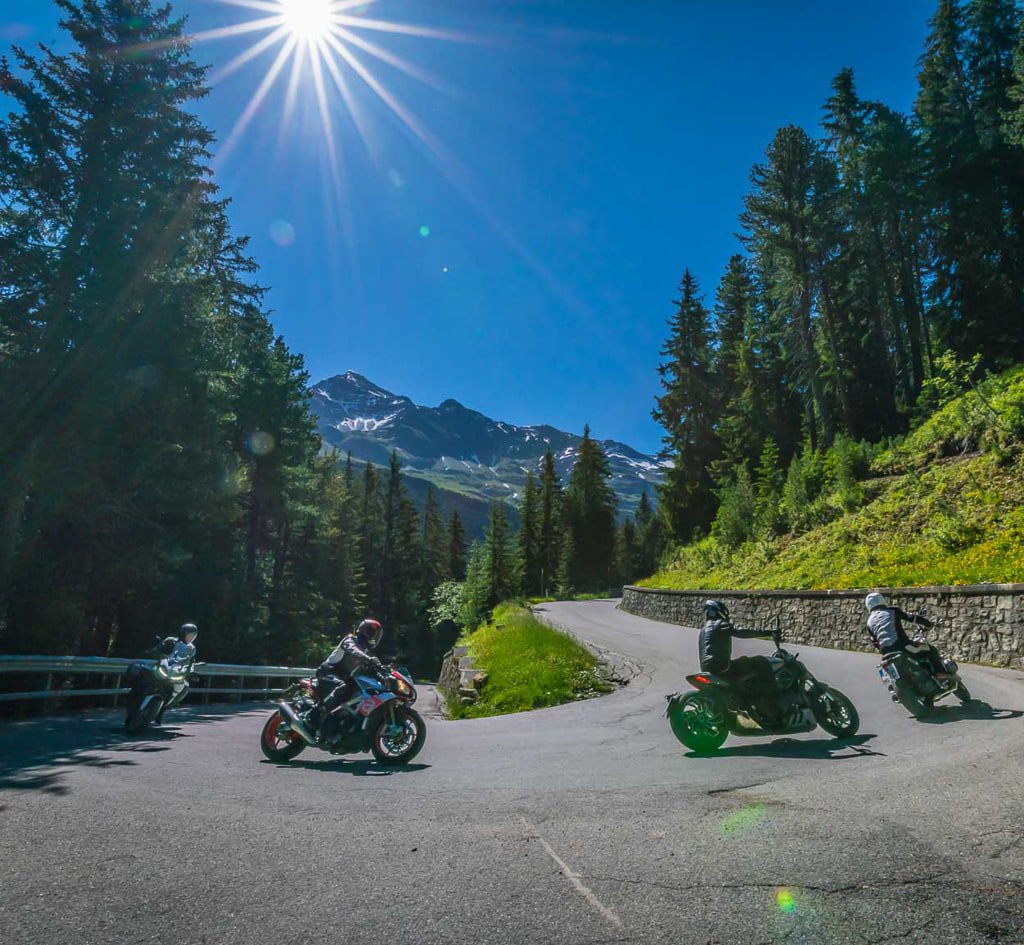
An extremely worn out path through the woods: on the way to the Gavia Pass
After a few kilometres, the landscape opens up – the path through the forest turns into a swing across the alpine pasture. But even here, especially here, it’s all the more true: the road was thrown up against the slope extremely creative and demands the utmost attention. In contrast to the Stelvio that climbs upwards on the other side of the Ortler massif here are no protective and supporting dry stone walls; the mountain constantly works on the asphalt, raises and lowers it, tears the rescue patches hastily applied in spring back down into the depths with its melt water and dramatically bends the rusty crash barriers.
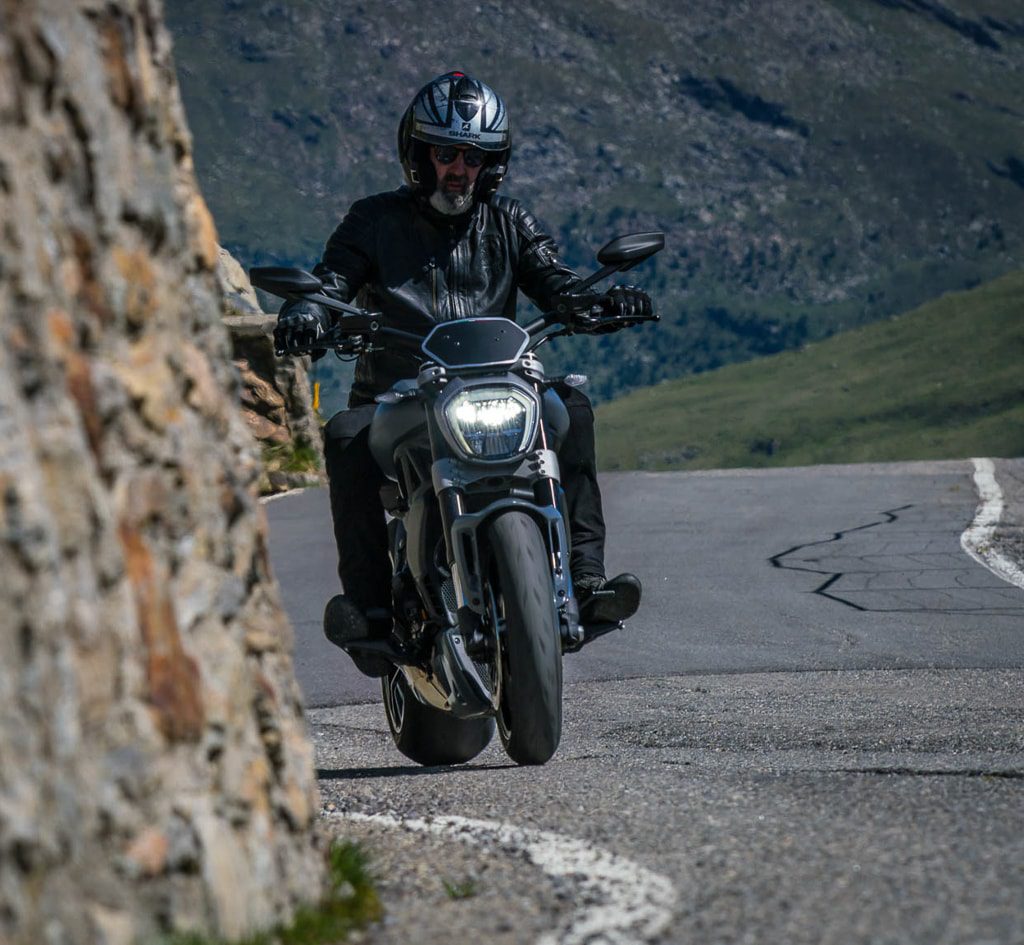
.. along sharp rock edges
More than once, the leather of the motorcyclist scrapes along the sharp rock edges jutting out of the mountain. Here man is only tolerated – nature just allows him a little colour for the few demarcation lines on the rough asphalt. The real colours are claimed by the grey-red rock: white foaming water cascades down from all sides, ancient lichens colour the stones, even under the wildest boulders yellow shining high mountain flowers push themselfes into the light.
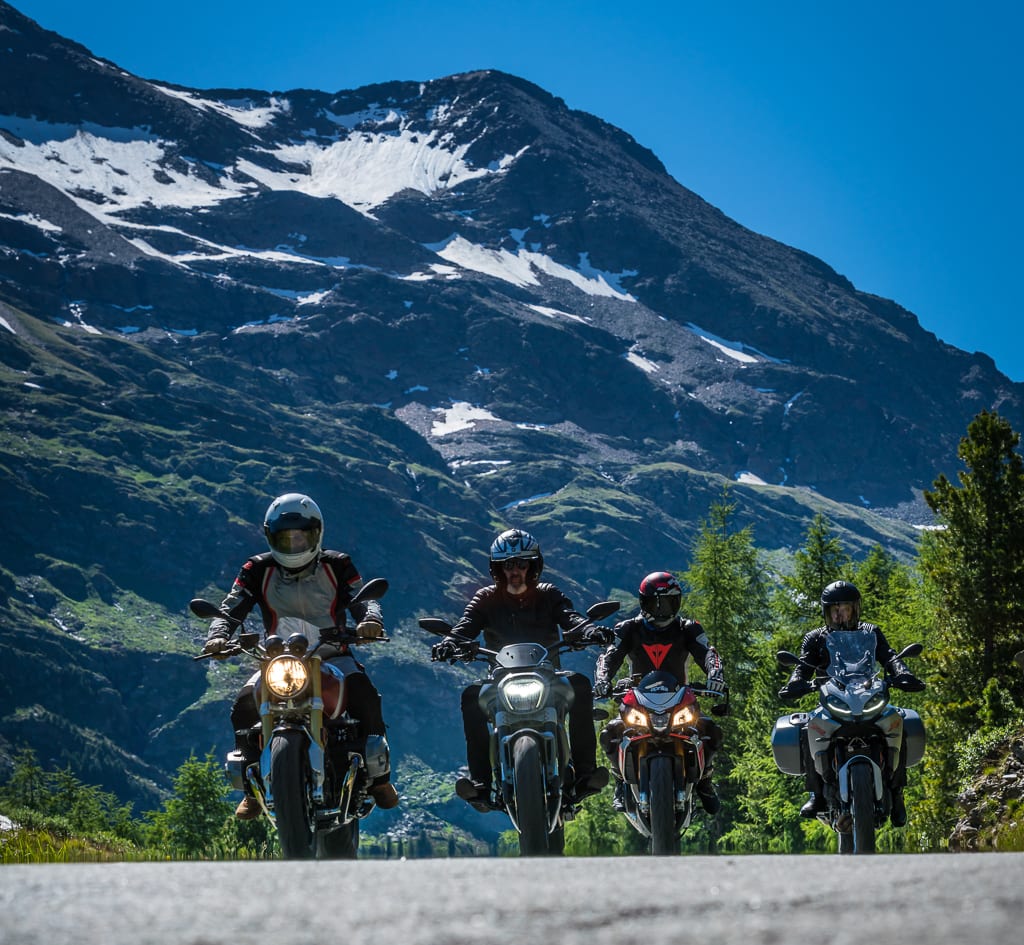
Great scenery
On the flat long plateau in the shadow of Monte Gavia the chassis gets a good workout – although there are permanent attempts to fix the edges of the road, to re-anchor walls and to find a solution for the suffering of the crash barriers. But this will remain pointless for a long time to come, because the forces of nature, whether in the freezing cold winter or in the stormy summer, will not be tamed here.
Finally, at 2600 m above sea level, shortly before the pass, the magical Lago Bianco appears, which does not at all live up to its name “White Lake” – its turquoise competes with the blue of the sky in fine weather, and the surrounding glacier-covered mountain peaks are reflected in it. Its twin a few kilometres behind the top of the pass, Lago Nero – “Black Lake” – nestled between two rock faces plunging into the valley, also fascinates with its radiant water glistening in the raw mountain scenery.
After this challenging ride, it’s time to relax – and few things put people at ease like a plate of fresh pizzoccheri, the typical pasta of Valtellina. Buckwheat pasta swimming in oodles of butter, covered with savoy cabbage and four kinds of cheese as well as potatoes make you forget every kick of your motorbike. Will the true heroes of this pass, the countless cyclists, also be able to forget the painful kicks over such a calorie bomb?
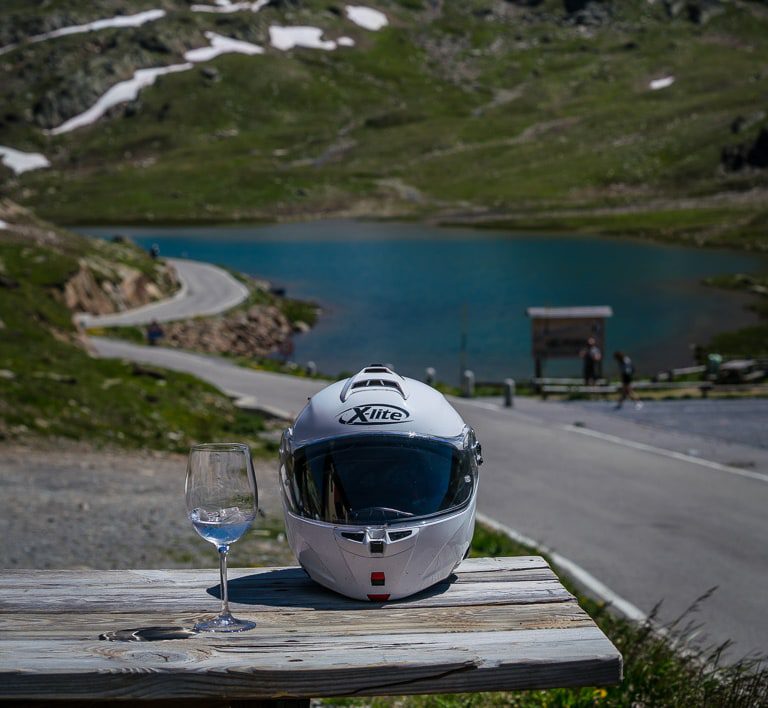
Relaxing at the top
Directly behind the Rifugio Bonetta, the road drops steeply down into the valley. The great Giro d’Italia is given brand-new asphalt – at least as far as the TV cameras can see from the top of the pass – which has to wind its way through colossal boulders. Quickly enough, however, the roadway adapts to the wild nature again. Like a living creature, the mountain arches over the increasingly narrow and steep road, bearing countless rocks of all colours on its flanks.
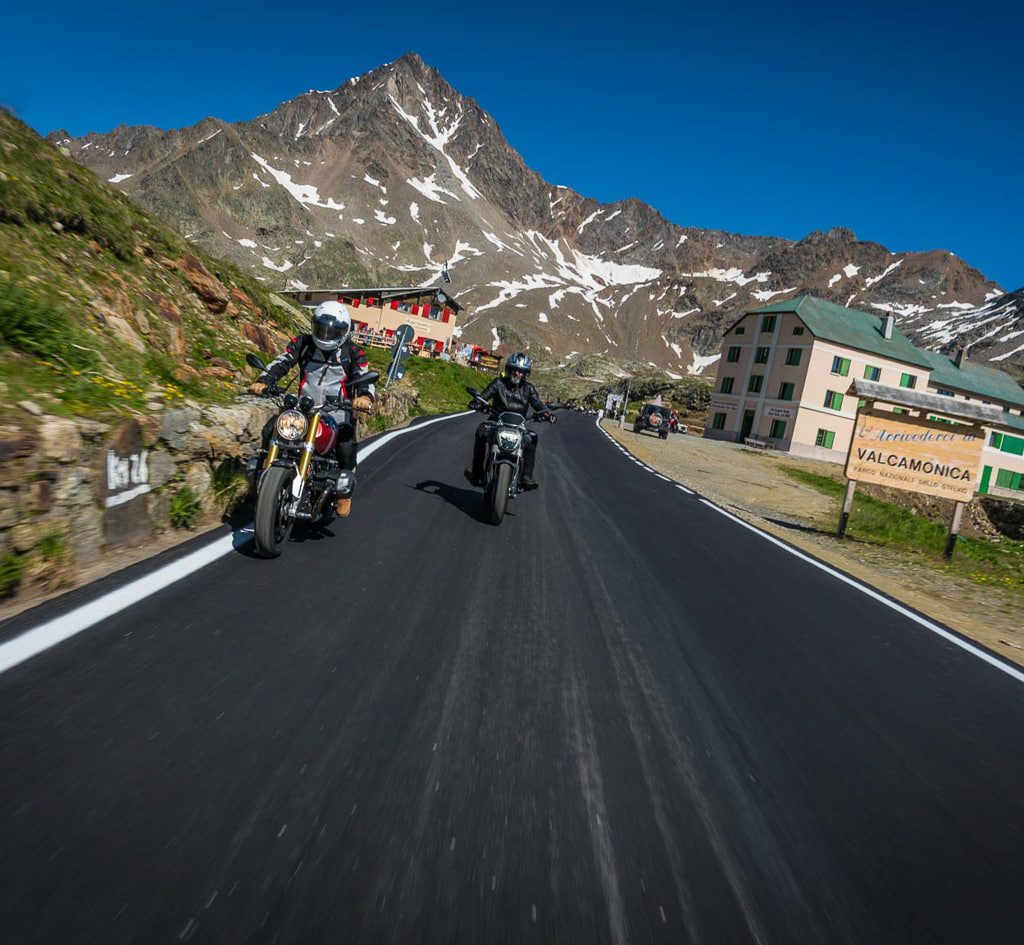
Brand new asphalt, at 2500 m above sea level
The power of nature shows itself in retaining walls that have fallen down to the valley – on whose remains new piles are stacked and built again. Wooden barriers – cheaper than metal guard rails and available on site – protect against glances – and also falls – into the depths. And although the panorama stretches into infinity up here, in quite a few places the mountain only offers space for the width of a car. Big adventure bikes have to exercise patience if they don’t want to sacrifice their aluminium boxes to the rocks of the Gavia.
You’re only allowed to travel 30 km/h here – walking speed is usually the better choice, especially in the narrows of the steepest sections in the forest.
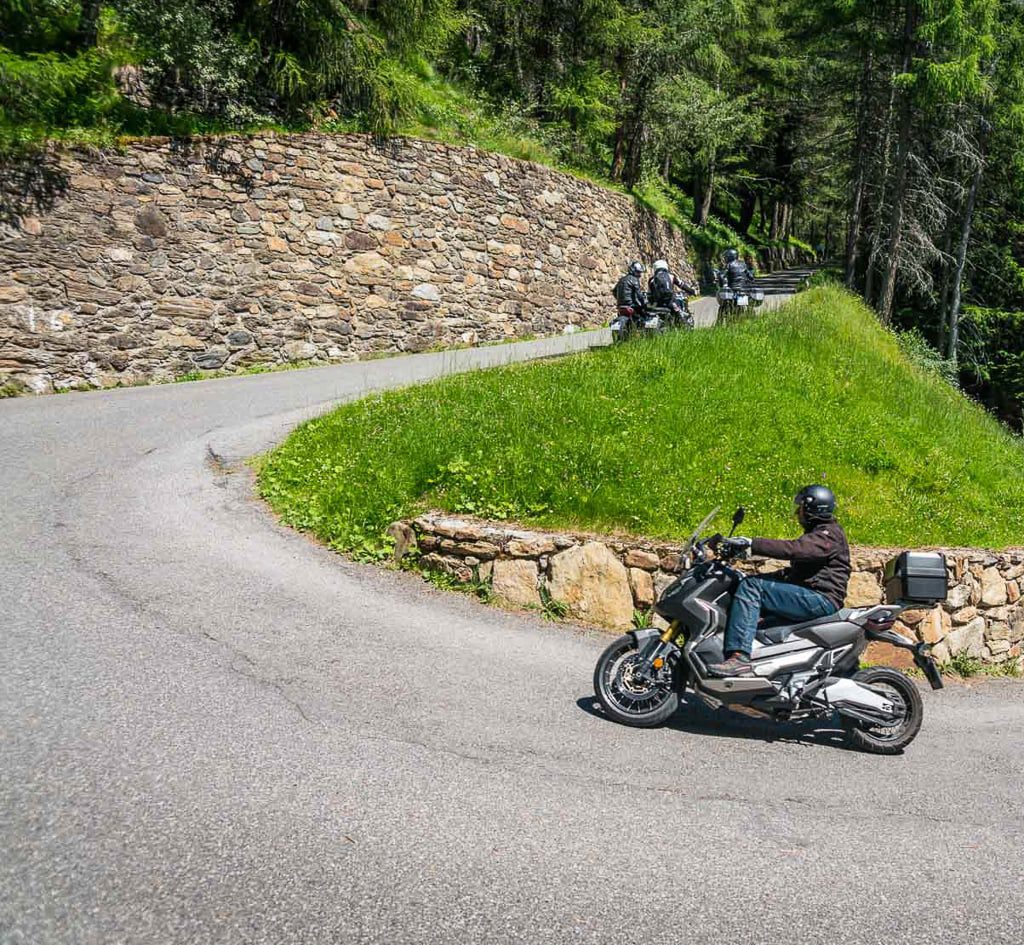
A scooter would be enough – max. permitted speed: 30 km/h
The attraction of the Gavia doesn’t lie in the celebration of driving performance and lean angles. Those who cannot detach themselves from the usual motorcycling here and let the almost crushingly wild and precisely for that reason beautiful landscape take its effect on them will only be able to enjoy the widening road again shortly before Ponte di Legno, at Sant’Apollonia.
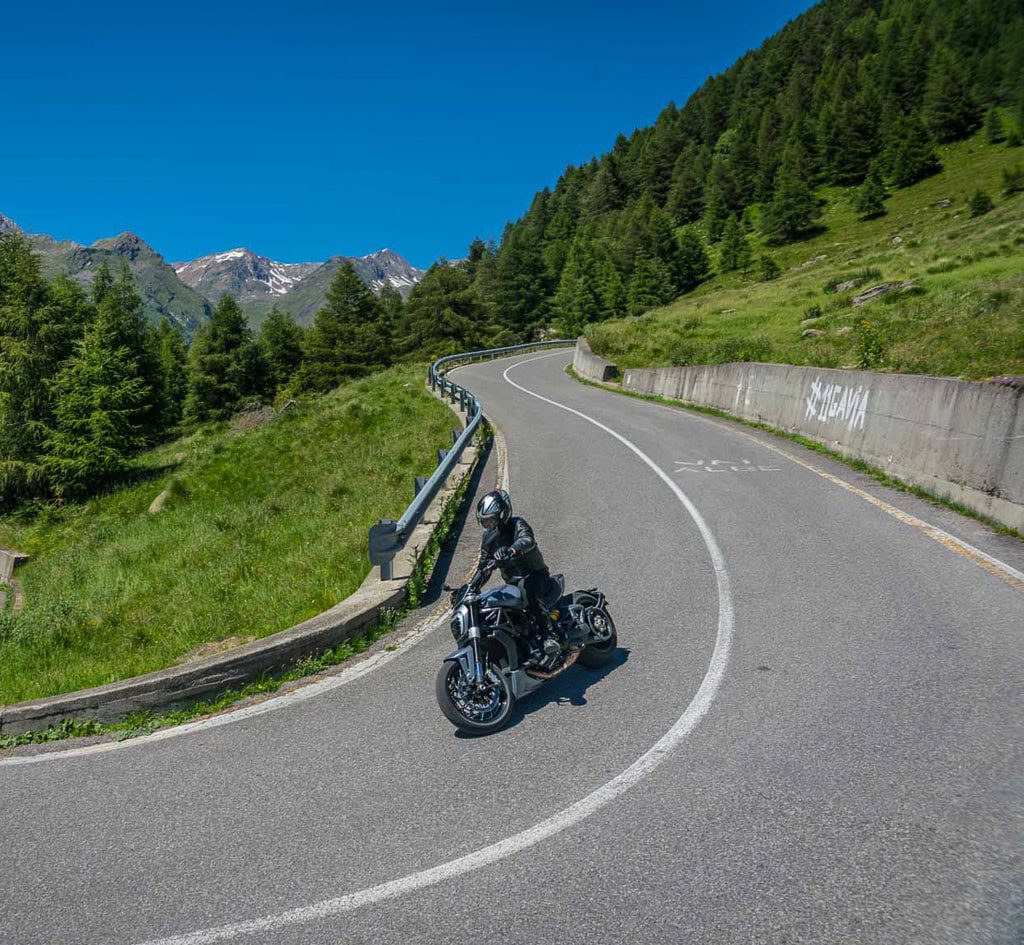
Shortly before Ponte di Legno – “motorcycle-friendly” again
Despite all the fascination about this road that winds its way through the mountains, a memorial not far from the top of the pass is a clear reminder that the Gavia would not exist without the horrors of the First World War. It were the Italian Alpini who paved the original mule track and made motorised travel from Bormio to Ponte di Legno possible.
The Gavia Pass (coordinates: 46° 20′ 37″ N, 10° 29′ 17″ E ) connects Bormio in the upper Italian province of Sondrio (north ramp) with Ponte di Legno in the province of Brescia (south ramp). Over 43.9 km, the road overcomes 10 hairpin bends coming from Bormio, and 15 coming from Ponte di Legno. The northern ramp is largely two-lane, the southern ramp is very narrow in places (lane width between 1.9 and 3 metres) and leads through an approx. 500 m long, unlit tunnel 2.5 km after the top of the pass. On both ramps, approx. 1400 metres of altitude are covered, the gradients reach up to 16%.
The indication of the altitude of the pass reveals a curiosity: the Lombardy region officially states 2621 m a.s.l., but at the Rifugio Bonetta a value of 2652 m a.s.l. is given. This is due to the old course of the old mule track, which before World War I did not follow the shore of Lago Bianco, but led through the rock at a slightly higher altitude (source: https://valtellinamobile.it/la-storia-della-vera-altezza-del-passo-gavia/).
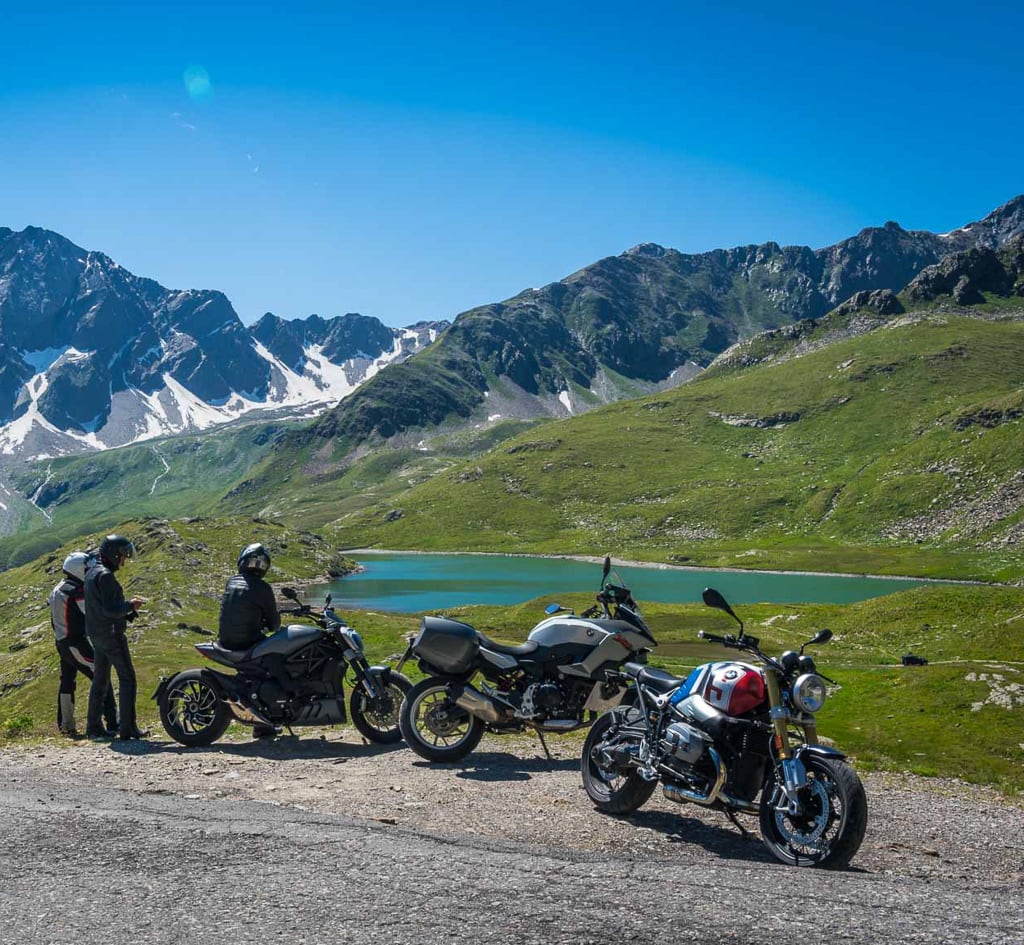
A dream road: the Gavia
Perfectly matching

Let’s climb the Stelvio together!

Stelvio – Count from 1 to 10!

Magical Moments

Dream Roads: The Susten Pass (2224 m)

Dream Roads: The Furka Pass (2429 m)