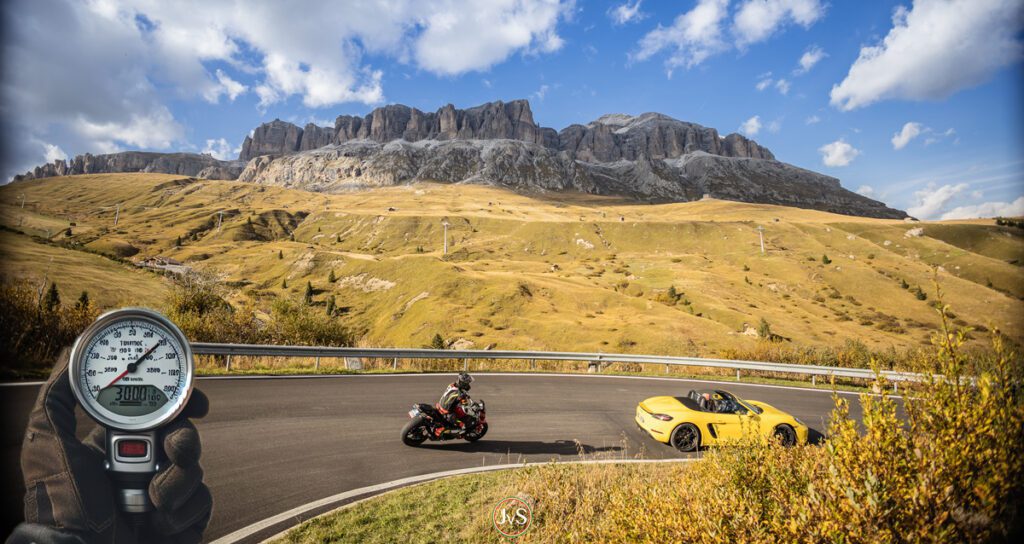
From June 2024, an innovative attempt will be made to reduce the impact of motorised traffic in the Dolomites – an altitude limit for driving on the passes is intended to do justice to the UNESCO World Heritage Site.

South Tyrol, April 1st 2024. First of all: Article 1 of the Italian Highway Code (Law no. 156 of 9 November 2021) states that “the safety and protection of people’s health and the protection of the environment in road transport are among the priority social measures”. Article 6 also provides for special consideration of these provisions on roads that cross and touch areas designated as UNESCO World Heritage Sites.
Environmental organisations have long been campaigning for traffic calming on the Dolomite passes, as the heavy volume of traffic not only affects the holiday experience of guests, but above all the quality of life of local residents.
Since autumn 2019, traffic around the Sella Group has been monitored by cameras. The findings are being used to implement “Sustainable mobility on the Dolomite passes” and the establishment of the “Dolomiti Low Emission Zone”: the aim is to make visiting the Dolomites more environmentally friendly: The goal by 2030 is a 55% reduction in climate-damaging emissions compared to 1990.
The 2035 South Tyrolean Plan for Sustainable Mobility states under Objective 5 (extract): “Reduce the climate and environmental externalities caused by the mobility of people (…), through the combined action of a reduction in individual mobility starting from sensitive areas such as the most vulnerable UNESCO zones (…).”
What
is it about?
Specifically, the aim is to restrict private transport while recognising the important role of tourism for South Tyrol’s economy. “Restriction of private transport” does not mean that anyone should be denied the experience of the Dolomites. Rather, it is about conscious travelling through the sensitive UNESCO area.
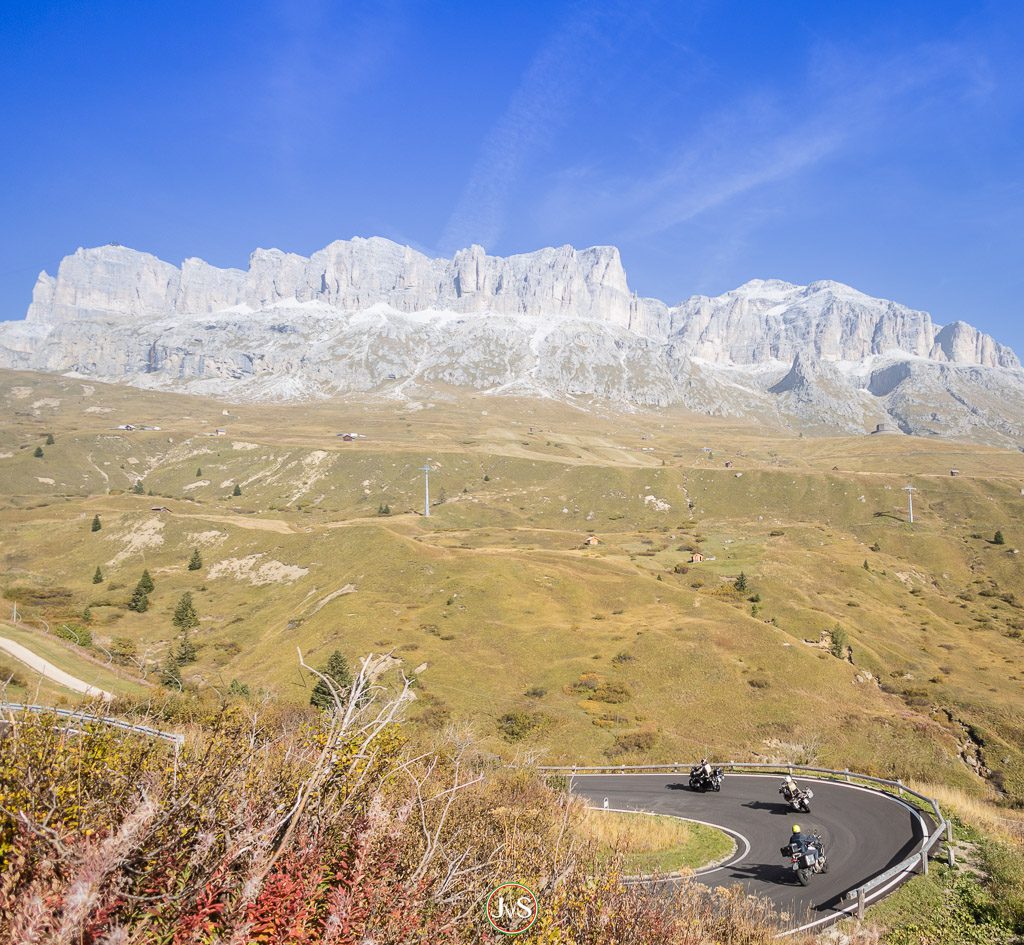
Travelling over passes several times in as short a time as possible is not seen as conscious travelling, but as an excess to be prevented. Therefore, from June 2024, a daily quota of 3,000 metres in altitude will apply to motorised private transport. Those who want to literally go higher will pay half a euro cent per metre of altitude.
What
does that mean?
An example calculation: The tour around the Sella Ronda with start and finish in Selva Gardena is possible free of charge – only 2,700 metres in altitude are reached (Gardena Pass, Campolongo Pass, Pordoi Pass and Sella Pass). If the route is extended to include the Passo Giau, there is a charge of €13.5 for the additional metres in altitude:
| Start / Finish | Route (Kurviger) | Metres in Altitude | Difference | Costs |
|---|---|---|---|---|
| Selva Gardena | Sella-Ronda | 2,700 | 0 | €0 |
| Selva Gardena | Sella-Ronda with Passo Giau | 5,700 | 2,700 | €13.5 |
The proceeds will benefit the enhancement of the Dolomites region, for example through the construction of information points and the creation of additional car parks or the addition of sanitary facilities to the existing ones. The number of charging stations for electric vehicles will also be increased.
A Challenging
Realisation
The responsible authorities are working closely with the tourism sector to implement the programme. Standardised measuring devices are used to record the altitude metres, which are issued by the hoteliers. They also take care of the billing – they are free to pass on some or all of the costs to their guests.
Day visitors and travellers passing through can obtain the sensor at the tourist information offices in the larger valley resorts, at all valley stations of the ski lifts, at participating hotels and at all petrol stations. Billing can also take place there. In the medium term, there will be a smartphone app that can record journeys and enable secure payment of the costs incurred.
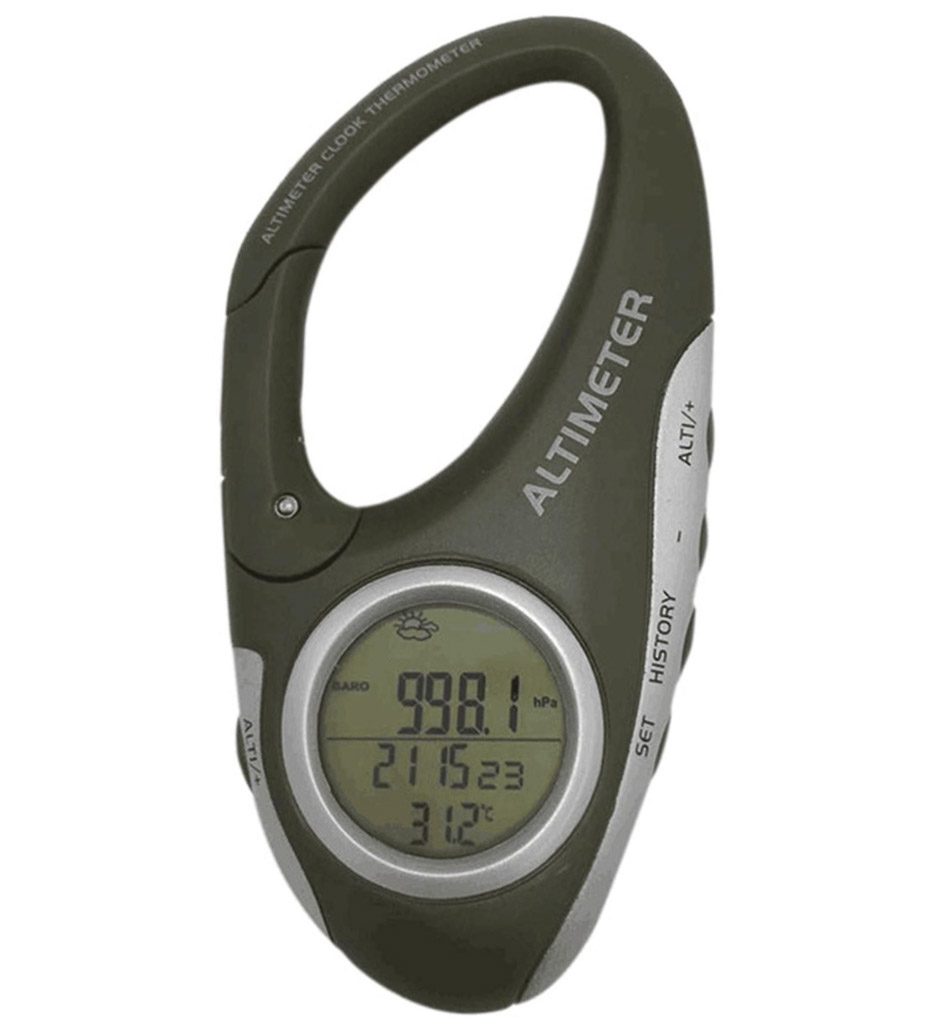
Accompanying measures enhance the Dolomites experience: the sensor serves as an admission ticket for museums, e.g. at the Pordoi Pass and Valparola Pass, and as a ticket for the cable cars. Pubs and restaurants offer discounts on drinks when the device is shown. Customised map and information material is designed to encourage careful driving.
Info and
interesting facts
The project will start on 1 June 2024 as a pilot as part of the “Sustainable mobility on the Dolomite passes”. From 15 April 2024, regular information events will be held on the access routes and the first sensors will be issued.
Accommodation providers are required to inform their guests about the measure and recommend that they take the sensor with them. Carabinieri, Polizia, Finance and Forestry guards are authorised to monitor the use of the sensors – no sanctions are expected during the pilot phase. Important to know: Electric vehicles are not subject to the altitude metre quota.
The data is collected and processed anonymously in accordance with the GDPR and is only stored for a limited period of time. They are analysed in cooperation with EURAC Bolzano.
Links
& Downloads
The website www.dolomiti-3000.com will go online on 15 April. The legal basis (in German language) for this project is linked below.
- Landesplan für nachhaltige Mobilität – Website
- Landesplan für nachhaltige Mobilität – Teil 1
- Landesplan für nachhaltige Mobilität – Teil 2
Perfectly matching:
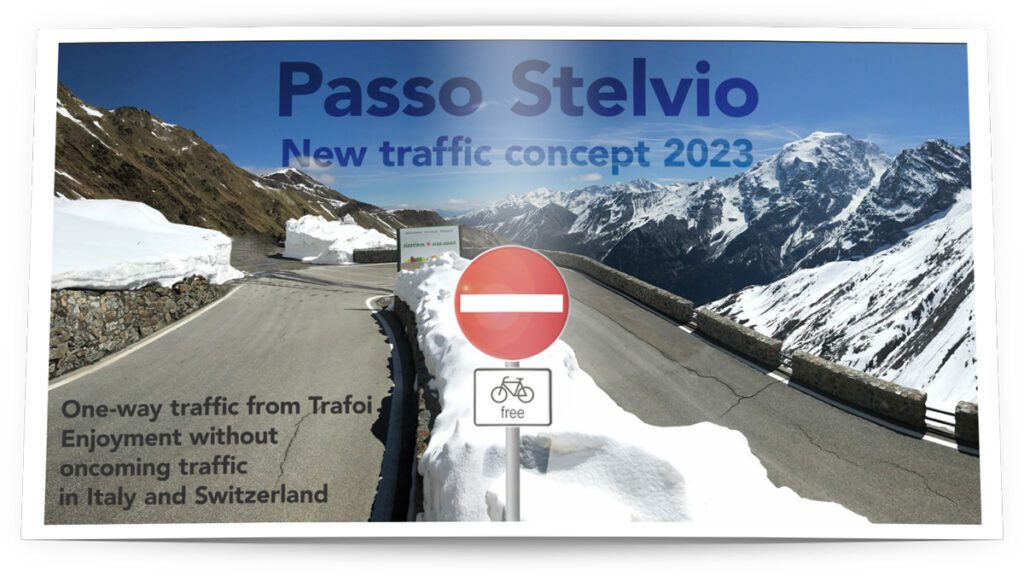
New for 2023: One-way regulation on the Stelvio Pass
2026 – What’s Coming, What’s Staying?

Let’s climb the Stelvio together!

A message from your knee pad