My Zero SR/F gets a lot right right out of the factory: It rides effortlessly, is easy to handle, and offers a gripping feel on the rear wheel. If I wanted to push it to the limit, it would be a killer hooligan bike—if only I could lean it into the corners a bit more. The Vario footrests from probrake are going to change that.

Before you read, please note: this post was translated with the help of Deepl.
If you find any errors – please have fun first and then give me a hint.
Because my electric roadster does so many things right, I’ve been happily riding it for six years now. There’s just one minor annoyance I haven’t been able to resolve yet: the footrests, which are mounted too low for my liking. Even during my—admittedly brisk—test ride up the Mendel Pass, the asphalt was scraping against my boots. Even with my feet all the way back on the footrests, I couldn’t avoid feeling the road scraping against them.
But this has to stay between us, OK?
More lean angle
would be cool
Zero does offer two different seat heights for the SR/F (I ride the taller version), but there’s no footrest with increased ground clearance. The corresponding mount is a solid aluminum piece and isn’t adjustable. So I’ve reduced the wear on my boots by adopting an active supermoto riding style—and it works quite well, because my feet don’t have much to do: There’s no gearshift, and the regenerative braking system does a better job of handling the rear brake anyway. As a result, there was rarely a reason not to extend my inside leg forward while leaning into a turn.
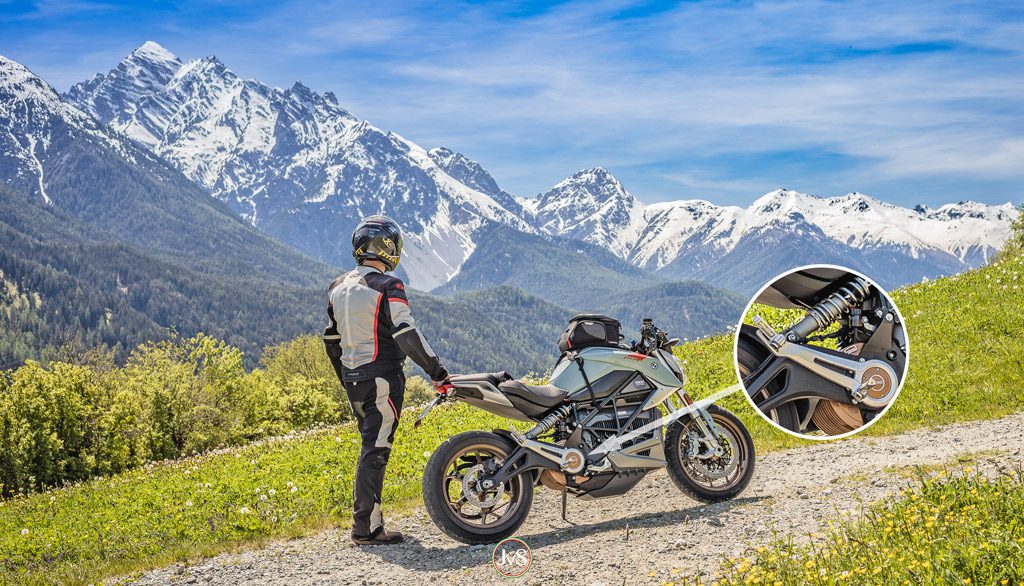
But all that fumbling around on a 230-kg motorcycle eventually turns into a comedy act. On top of that, the high-grip sole of a Daytona boot really shouldn’t touch the asphalt while riding. Especially not accidentally, because that always ends painfully. I couldn’t find a solution—until the specialists at probrake reached out to me. Their product line includes not only handlebars, crash pads, and complete brake kits (rotors, pads, steel-braided lines, brake levers), but also footrests with adjustable length and position, complete with vehicle-specific adapters. That’s exactly what I’ve been waiting for.
Let’s get started.
We do mechanical work.
Replacing footrests isn’t difficult. It only takes a few quick steps to remove the old ones, but finding the retaining springs that have flown off takes much longer. But before I start the installation, I take another close look at the probrake parts—after 25 years in the hardware industry, I have a soft spot for unique metal parts. And I can’t complain:
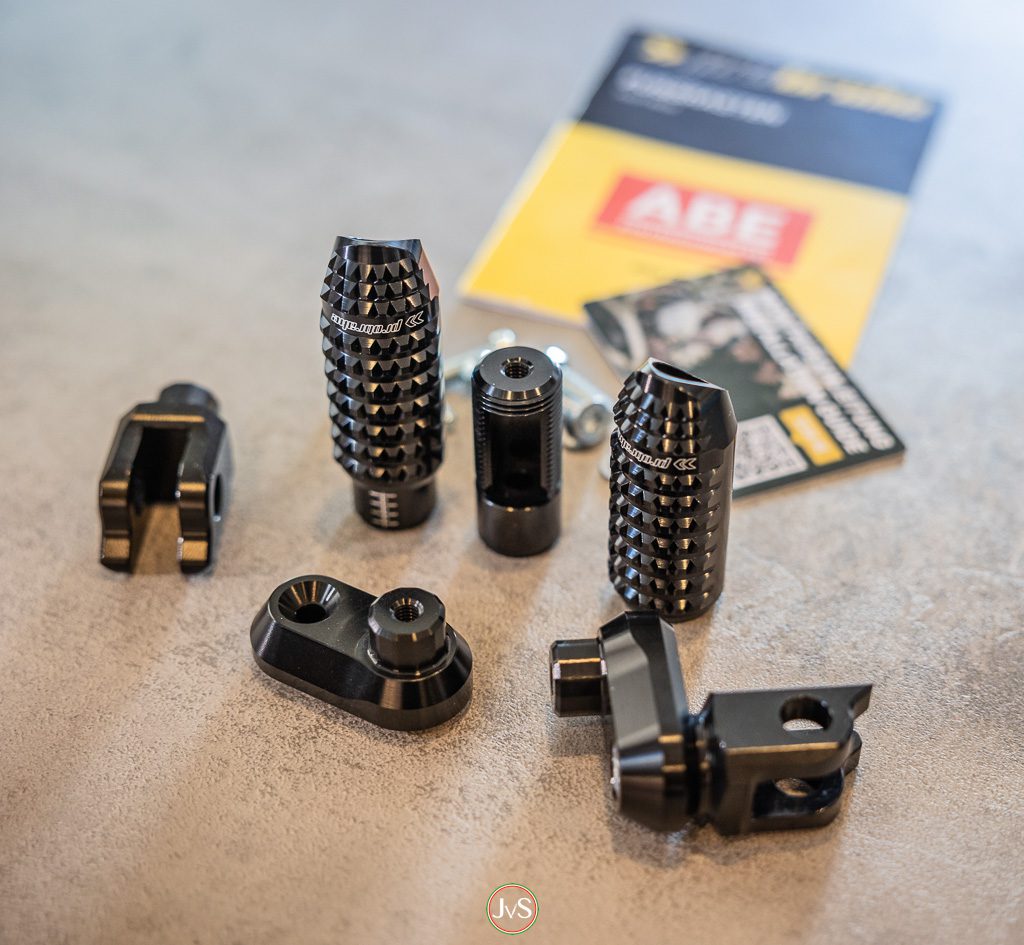
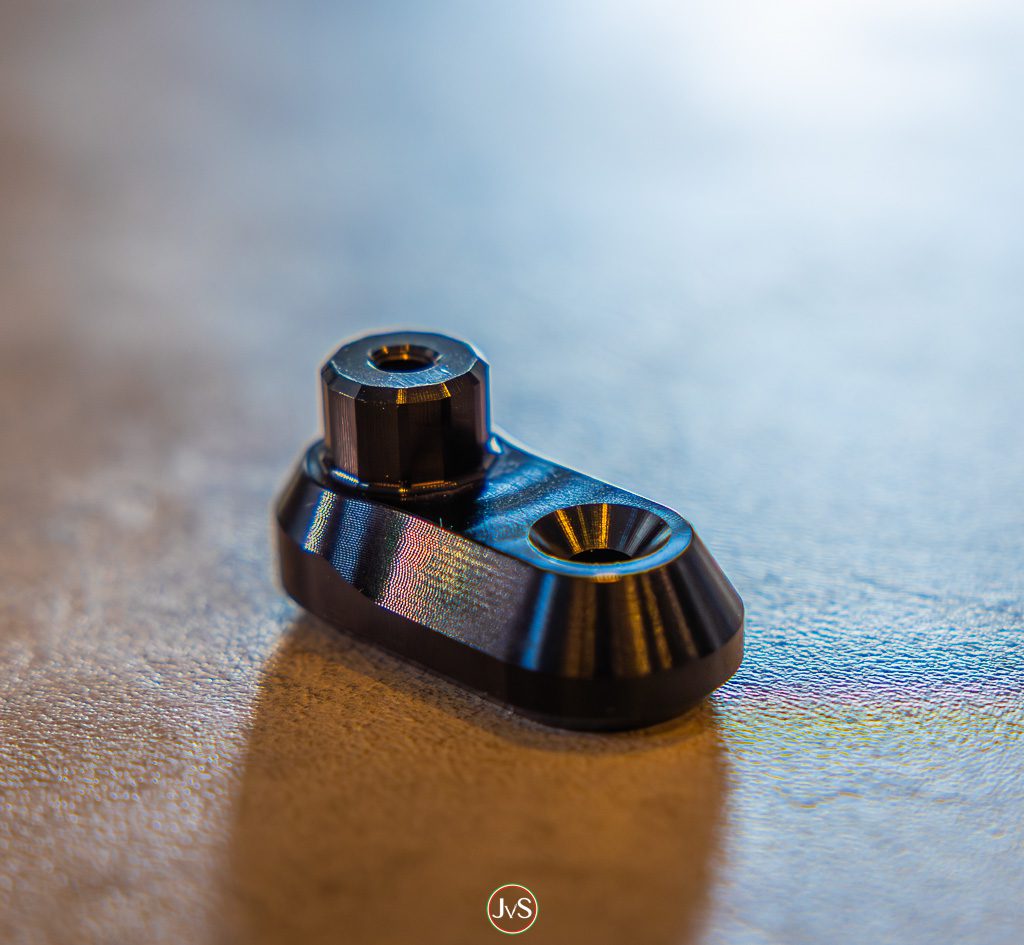
I take the superbly crafted, feather-light, multi-piece aluminum parts—complete with adapters and decorative rings—out of the packaging. Beneath the anodized coating, you can see the fine milling marks—I like that. The lettering, logos, and alignment marks are laser-etched. I can’t find any sharp edges or burrs. In comparison, the crudely stamped original parts feel like rebar.
Vario – Higher,
farther back, longer (or shorter)
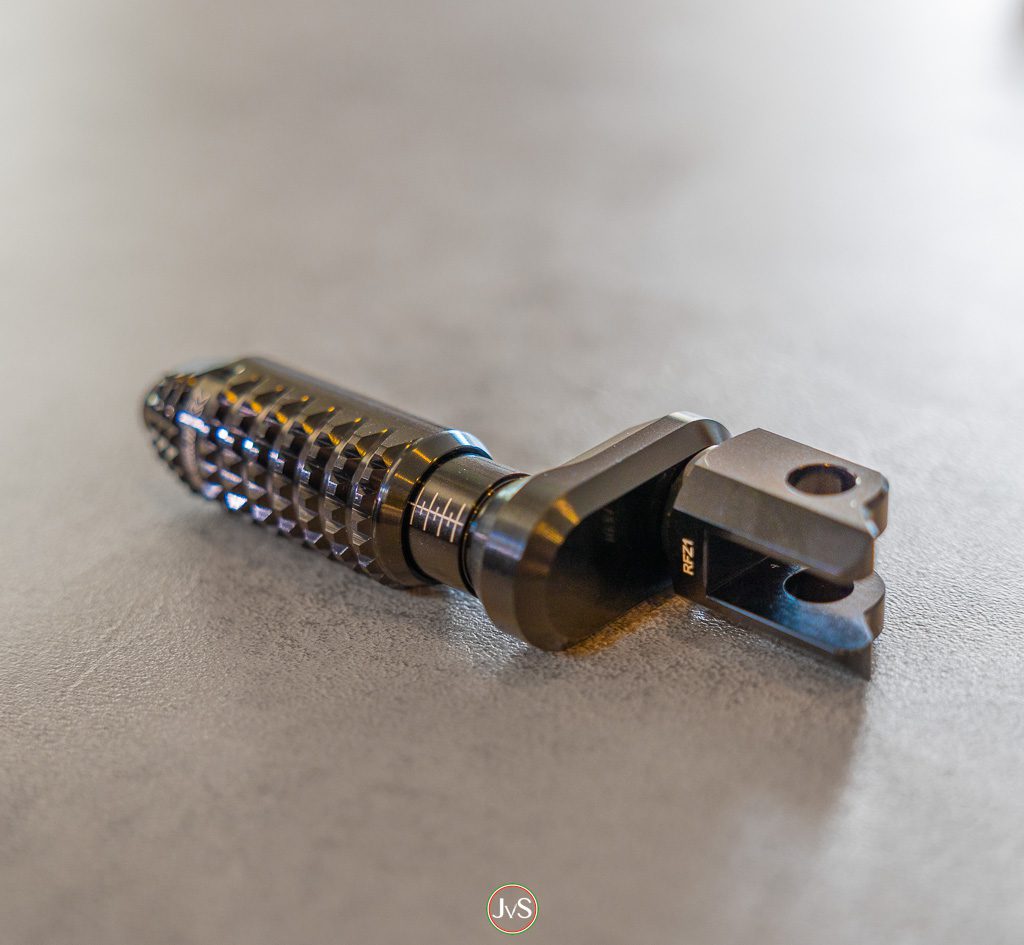
What makes the probrake footrests particularly interesting are the (optional) extensions—25 mm long in my case. They are mounted between the adapter and the footrest body and allow the footrests to be positioned in virtually any location around the center of the adapter. “Virtually any” because there are twelve preset positions: 25 mm forward or backward, 25 mm up or down, and two positions in between each. A form-fitting interlocking mechanism prevents unwanted rotation.
When it comes to length, the probrake footrests are also top-notch. The footrest bodies can be shortened to 65 mm (suitable for sport boots and extreme lean angles) or extended up to 85 mm. This means there’s room for enduro boots as well. The aforementioned scale, laser-etched into the aluminum, helps you find the correct length on both sides.
Of course, the adapters fit perfectly onto the Zero’s mounting brackets. Nothing gets stuck, nothing wobbles. That wouldn’t be surprising for CNC-machined parts designed to meet premium standards. It’s kind of a shame that I’ll end up trampling all over this elegant black finish.
The included M6 bolts require medium-strength threadlocker; a meager 10 Nm is all it takes to hold the whole assembly together. To finally address my leaning issue, I mounted the footrests in the “short of 12 o’clock” position. About 25 mm higher and further back might not sound like much, but the cramp in my thigh sets in much faster. From now on, I’ll do some stretching exercises before getting on the bike.
Conclusion: Small parts,
big impact
Do you know that moment when you set off after making a change to your motorcycle and ask yourself, “Was that a good move or a mistake?” You’ll have your answer after just a few turns. My feet are now higher, my knees are bent more sharply, and the footpegs grip the soles of my boots more firmly. There’s no longer any risk of slipping when I’m not paying attention or in wet conditions, and it all feels sportier—actually, better. So: “Yes, that was a good move.”
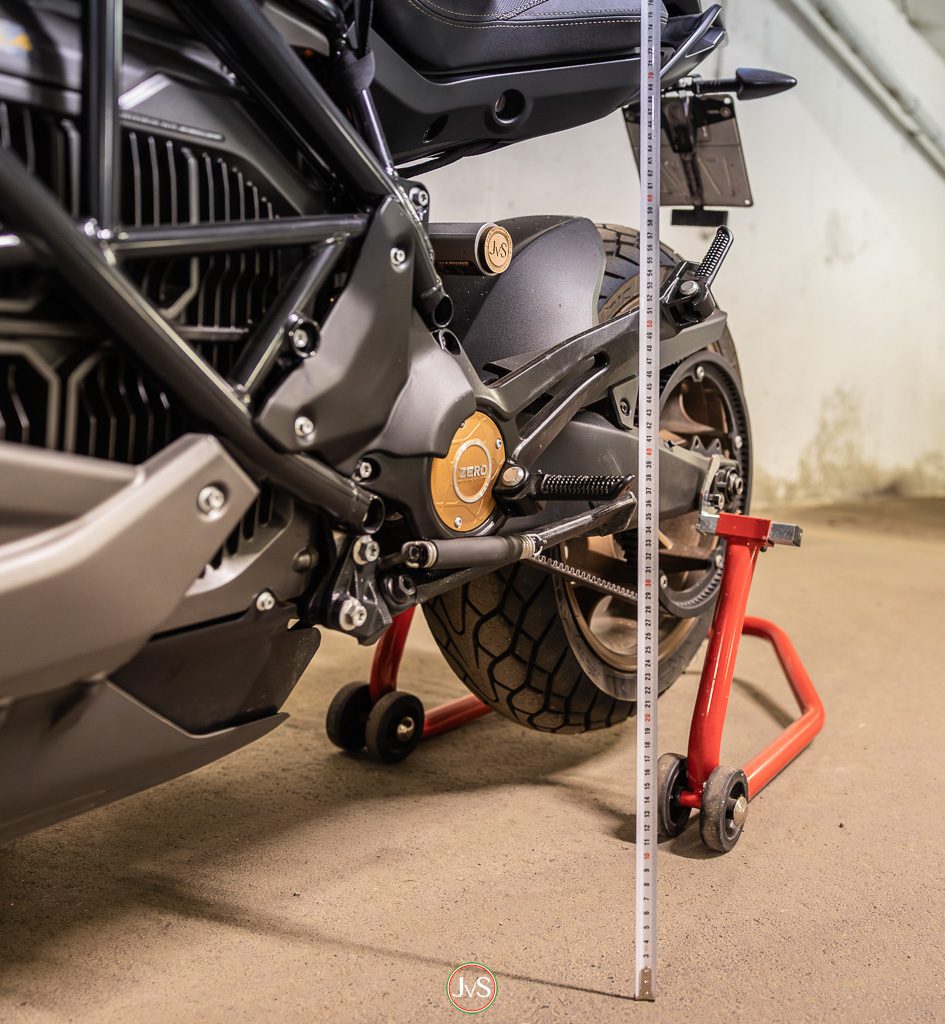
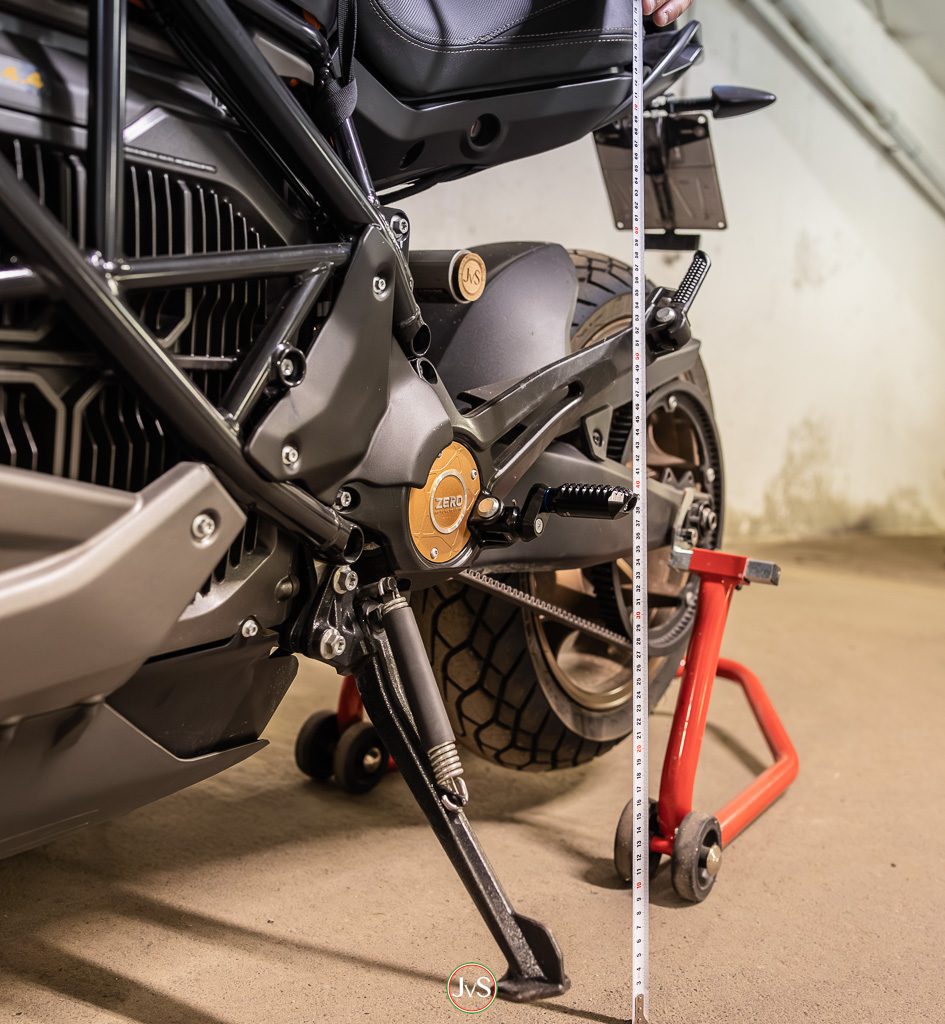
Over the years, my pride in my motorcycle has undeniably waned. Still, I have to say: The adjustable footpegs from probrake look great. Whether they make my SR/F look better is up for debate—but they’re definitely a better fit for the Zero’s price tag than the original parts. And they solve a problem I’ve been dealing with for six years.
These Vario footrests are available for all standard motorcycles, for both riders and passengers. If you’re looking for maximum grip, choose the “Desert” model with an enduro claw; for those who are used to the finer things and have sensitive feet, the “Comfort” version with a rubber pad is the way to go. And if you live by the motto “The world needs more color,” you can choose from seven different color rings.
The certificate for any potential roadside police stop is included. Registration of the Vario footrests is not required; the installation instructions are available via QR code or on the probrake website.
Who is
probrake?
Among other products, probrake develops and sells brake and clutch levers, steel-braided lines, brake rotors, and accessories such as footrests and protective parts. The company has been manufacturing premium motorcycle parts in Germany since 2010—with a focus on safety, functionality, and a look that complements the motorcycle. The product range covers a broad spectrum, from Japanese sport bikes to European naked bikes and tourers, as well as Harley-Davidson, Vespa, and quads.
The Vario footrests presented here are designed for riders who want to fine-tune their motorcycles. The toothed adjustment mechanism ensures stable positioning and consistent settings, even after the footrests have been removed.
For the sake of order
The adjustable Vario footrests with blue spacer rings and extensions were provided to me free of charge. I am therefore required to label this post as an advertisement.
FAQ on probrake’s Vario Footrests
Perfectly matching:

Bullet Brake, or: Your motorcycle brake can do more
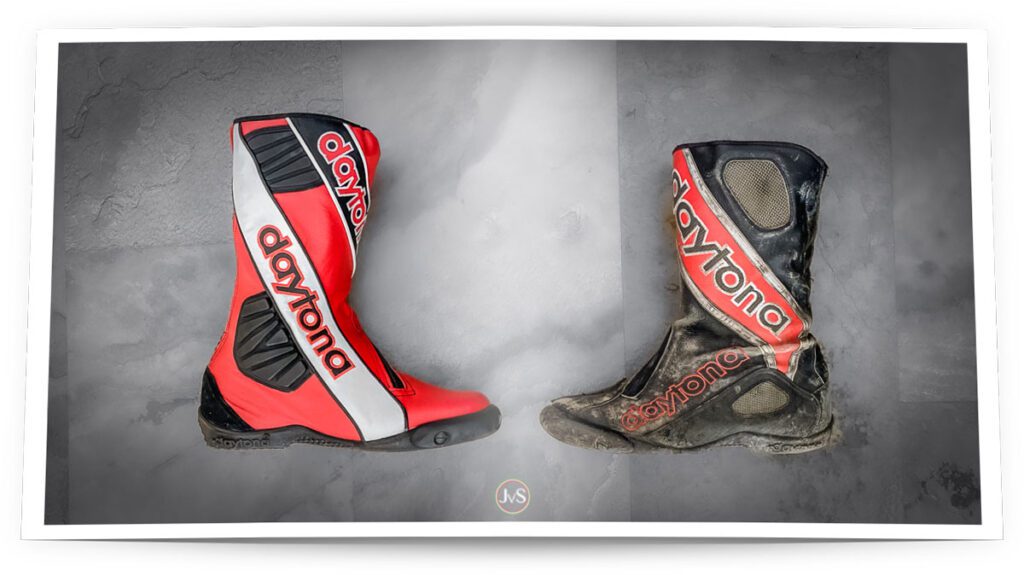
New boots for MotorProsa: Daytona Security Evo G3

Get Dressed in Pakistan – Customised Leather Suit

Tried it out: Professional Line photo book from Saal Digital